Asymmetric Paths, Asymmetric Truth: How One-Way Latency Is Corrupting Financial Trade Timestamps
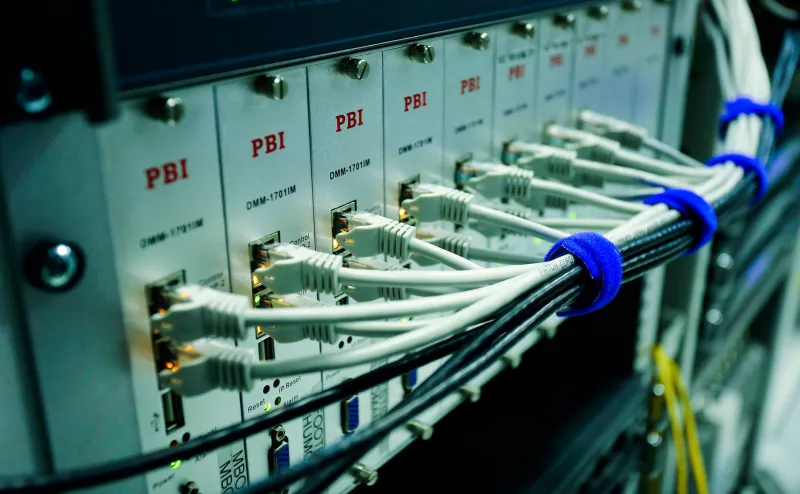
In the world of high-frequency trading, time is not merely a dimension — it is a compliance instrument, a forensic record, and occasionally a competitive weapon. Regulatory frameworks such as the SEC's Regulation SCI and FINRA's OATS requirements, along with the European MiFID II clock synchronization mandates that influence US-listed foreign equities, demand that exchanges and broker-dealers maintain timestamps accurate to within one microsecond of a traceable UTC source. On paper, that requirement sounds achievable. In practice, the network infrastructure carrying synchronization signals is quietly undermining the integrity of every clock on the trading floor.
The problem is not that financial firms lack sophisticated timing equipment. Many co-location facilities operated by major US exchanges — including those in Mahwah, New Jersey and Aurora, Illinois — deploy IEEE 1588 Precision Time Protocol stacks, GPS-disciplined grandmaster clocks, and hardware timestamping NICs that claim sub-100-nanosecond accuracy. The problem is a structural one that sits beneath all of that investment: network latency asymmetry.
Why Symmetric Assumptions Break Real Networks
PTP achieves its accuracy through a deceptively elegant mechanism. A grandmaster clock issues a Sync message carrying its current timestamp. The receiving slave clock notes its local time of arrival, then exchanges Follow_Up and Delay_Request messages to estimate the round-trip propagation delay. Crucially, PTP assumes that the forward and reverse propagation delays are equal — that the path from master to slave and the path from slave to master traverse the same physical distance through the same switching fabric with the same queuing behavior.
Real networks violate this assumption constantly. Asymmetric fiber runs between racks, differing optical amplifier configurations on transmit versus receive paths, and unequal numbers of switching hops in each direction all introduce systematic one-way delay differentials. If the forward path from grandmaster to slave carries 200 nanoseconds more latency than the reverse path, PTP's delay averaging mechanism will embed a 100-nanosecond offset directly into the slave's corrected time. That offset is not random noise — it is a fixed, repeatable bias that will affect every trade timestamp produced by that node for as long as the asymmetric path persists.
In a co-location environment where competing trading firms share the same physical infrastructure but receive slightly different fiber patch lengths, even a 10-nanosecond asymmetry can produce a consistent timestamp advantage for one participant over another when trade sequences are reconstructed during a regulatory audit.
Hardware Interrupt Latency and the NIC Timestamping Problem
Asymmetric propagation is only one layer of the problem. Even after a PTP-corrected time reference reaches a trading server, the process of applying that reference to individual trade events introduces additional uncertainty.
Software timestamping — where the operating system kernel records the arrival time of a packet — is subject to interrupt scheduling delays that routinely exceed several microseconds under load. A busy trading server processing order acknowledgments while simultaneously running risk calculations can experience kernel interrupt latencies that dwarf the nanosecond-level accuracy the grandmaster clock was working to deliver. The timestamp written into the trade record may reflect when the OS got around to noticing the packet, not when the packet actually arrived at the NIC.
Hardware timestamping offload addresses this by moving the timestamp capture function onto the network interface card itself, recording packet arrival time in silicon at the moment the frame crosses the PHY boundary. This eliminates kernel scheduling jitter from the measurement chain. However, hardware timestamping introduces its own complications: the NIC's internal free-running oscillator must itself be disciplined to the PTP-corrected time, a process that varies in implementation quality across vendors. Some NICs exhibit timestamp quantization errors of 8 nanoseconds or more due to coarse internal clock granularity, while others show systematic offsets between their TX and RX timestamp clocks that are not corrected by standard PTP servo loops.
Boundary Clocks and the Hierarchy Problem
Large trading infrastructure rarely connects every endpoint directly to a grandmaster. Instead, PTP boundary clocks — devices that terminate PTP on one port and re-originate it on another — distribute timing across network segments. A boundary clock absorbs the upstream path's accumulated latency error and presents a locally corrected time reference to downstream devices, preventing timestamp uncertainty from compounding through every switching hop.
In theory, boundary clocks are the correct architectural answer to scale. In practice, they introduce their own failure modes. A boundary clock whose internal oscillator is degrading will holdover gracefully for a period but will eventually drift in ways that are not immediately visible to downstream slaves. In a multi-vendor environment — common in large financial data centers where network equipment is sourced from multiple suppliers — boundary clock implementations may differ in how aggressively they respond to upstream grandmaster corrections, creating pockets of the network that lag behind the reference by tens of nanoseconds without triggering any alarm.
The challenge for exchange operators and trading firms is that no single monitoring tool provides a unified view of timestamp accuracy across the full path from grandmaster to trade event log. Timing verification typically requires dedicated test equipment — such as a GPS-referenced time interval analyzer — placed at the endpoint itself, measuring the actual offset between the local clock and UTC rather than relying on the PTP servo's self-reported lock status.
White Rabbit Protocol: A More Rigorous Alternative
Developed originally at CERN for synchronizing particle accelerator instrumentation across kilometers of fiber, the White Rabbit protocol extends IEEE 1588 with two capabilities that directly address the financial timing problem: precise measurement and correction of fiber asymmetry, and sub-nanosecond synchronization through a combination of PTP and synchronous Ethernet (SyncE).
White Rabbit achieves asymmetry correction by using the known wavelength-dependent propagation characteristics of fiber optic cable. By transmitting synchronization signals at two distinct wavelengths simultaneously and measuring the differential delay between them, White Rabbit hardware can quantify the fixed asymmetry of a fiber link and apply a calibrated correction to the PTP offset calculation — something standard PTP implementations cannot do without manual, error-prone configuration of fixed delay asymmetry parameters.
Several US financial infrastructure providers have begun evaluating White Rabbit deployments, particularly for the grandmaster-to-boundary-clock segment of their timing hierarchy where asymmetry errors are largest and most consequential. The protocol's overhead requirements are modest — it operates on standard SFP-based fiber connections — but its adoption demands that both ends of each link run White Rabbit-capable hardware, which limits near-term deployment to greenfield segments or scheduled equipment refresh cycles.
The Regulatory Pressure Is Not Easing
US regulators have demonstrated increasing sophistication in their understanding of timing infrastructure. FINRA's clock synchronization rules already require documented evidence of synchronization accuracy and the traceability chain back to a NIST-recognized UTC source. As audit methodologies mature, the expectation that firms can produce not just timestamps but evidence of the error bounds on those timestamps will only grow.
For engineers responsible for timing infrastructure at exchanges, broker-dealers, and co-location facilities, the practical implication is that timestamp accuracy must be treated as a measurable, monitored quantity — not an assumed property of a deployed PTP stack. Asymmetric path characterization, NIC timestamping validation, boundary clock health monitoring, and end-to-end time transfer verification are not optional refinements. They are the engineering foundation upon which regulatory compliance and forensic trade reconstruction actually rest.
The grandmaster clock may be telling the truth. The question is whether that truth survives the journey to the trade log intact.