Rethinking RF: How Time-Domain Methods Are Reclaiming Ground in 5G and Radar Engineering
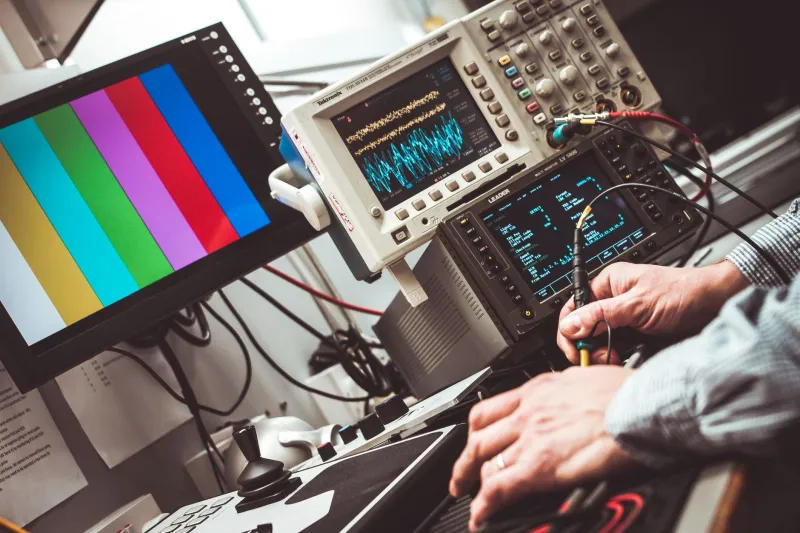
For decades, the Fast Fourier Transform has served as the default lens through which RF engineers examine signals. Spectrum analyzers, vector network analyzers, and channel sounders all owe much of their diagnostic utility to frequency-domain decomposition. Yet as modern wireless systems grow more temporally complex—think 5G New Radio's dynamic slot structures and ultra-wideband radar waveforms—the FFT's inherent trade-offs are becoming increasingly visible. A quiet but consequential shift is underway in US defense and telecom research laboratories: engineers are returning to the time domain, not as a fallback, but as a first-principles analytical strategy.
The Frequency Domain's Blind Spots
The FFT is a stationary analysis tool at heart. It assumes that the signal under examination is periodic or at least quasi-stationary over the observation window. For a narrowband continuous-wave carrier, that assumption holds reasonably well. For a 5G NR signal operating across a 100 MHz channel with mini-slot scheduling, burst-mode transmissions, and beam-switched antenna arrays, it does not.
When a spectrum analyzer displays a power spectral density plot of a 5G mmWave downlink, it presents an averaged picture—a time-collapsed view that obscures the precise moment a transient interference event occurs, masks the intra-symbol dynamics of a modulated burst, and flattens the temporal relationships between co-channel emitters. An engineer staring at that display may correctly identify that interference exists without ever determining when it arrives or how long it persists. Those two quantities, duration and arrival time, are precisely what the time domain preserves.
Transient Interference: A Case Study in Temporal Resolution
Consider a scenario increasingly common in US urban 5G deployments: sporadic packet errors in a millimeter-wave small cell that cannot be reproduced in a controlled RF chamber. Spectrum analysis reveals a slightly elevated noise floor during busy hours but offers no smoking gun. The culprit, in documented cases reported by US telecom research teams, has been impulsive interference from switching power supplies in adjacent commercial equipment—transients lasting tens of nanoseconds that the averaging behavior of a spectrum analyzer effectively erases.
A real-time oscilloscope configured with a wideband RF front end, however, captures the raw voltage waveform continuously. With triggering set to detect amplitude excursions above a defined threshold, the instrument can isolate and timestamp individual transient events. Post-capture envelope detection and time-domain correlation then allow engineers to associate specific interference pulses with particular link-layer error bursts logged by the basestation. This workflow—stimulus capture, temporal correlation, root-cause attribution—is fundamentally a time-domain exercise that no spectrum analyzer can replicate.
Leading real-time oscilloscope platforms from vendors such as Keysight and Tektronix now offer sample rates exceeding 100 GSa/s with analog bandwidths above 60 GHz, placing even mmWave transients within reach of direct temporal capture.
Pulse Characterization in Wideband Radar
Modern radar systems—particularly those developed under US Department of Defense programs for electronic warfare and synthetic aperture applications—routinely employ wideband and ultra-wideband waveforms. Characterizing these pulses accurately demands temporal precision that the frequency domain cannot provide in isolation.
Pulse rise time, fall time, overshoot, ringing, and inter-pulse timing jitter are all time-domain quantities. When a radar transmitter's pulse shaping network introduces even a few hundred picoseconds of timing irregularity, the resulting range ambiguity can degrade target discrimination. Engineers at facilities like the MIT Lincoln Laboratory and the Naval Research Laboratory have long relied on time-domain measurements to validate pulse fidelity before a waveform ever reaches a field environment.
Beyond simple waveform inspection, time-domain cross-correlation is used to measure pulse-to-pulse coherence—a critical parameter for Doppler processing. The FFT can tell you the spectral occupancy of a radar pulse; time-domain correlation tells you whether two successive pulses are coherent enough to support velocity estimation. These are complementary insights, not competing ones, but the distinction matters when debugging a radar front end.
Time-Domain Reflectometry: The Underappreciated Diagnostic
Time-domain reflectometry deserves particular attention as a resurgent tool in both defense and commercial telecom infrastructure work. TDR operates by injecting a fast-rise step or impulse into a transmission line and measuring the reflected waveform as a function of time. Because electromagnetic propagation velocity in a given medium is known, time maps directly to distance. Impedance discontinuities—connectors, cable faults, PCB trace transitions, antenna feed mismatches—appear as discrete reflections at calculable locations.
In 5G base station deployments, where antenna feed networks may span multiple meters of coaxial cable and involve dozens of connectors, TDR provides a non-destructive means of locating degraded connections without dismantling the installation. A reflection appearing at, say, 4.7 nanoseconds after the stimulus corresponds to a fault roughly 70 centimeters from the test point in standard coaxial cable—a level of spatial specificity no frequency-domain return-loss measurement can match.
Vector network analyzers can generate TDR traces through inverse Fourier transformation of S-parameter data, a technique sometimes called frequency-domain TDR. However, direct time-domain TDR instruments offer superior dynamic range for long cable runs and avoid the windowing artifacts that inverse FFT processing introduces. For field maintenance crews working on distributed antenna systems in US stadiums, airports, and transit corridors, a dedicated TDR instrument remains the faster and more interpretable diagnostic option.
Integrating Time and Frequency: The Practical Workflow
The resurgence of time-domain analysis does not imply the abandonment of frequency-domain tools. The most effective engineering workflows treat the two perspectives as complementary layers of a single analytical stack. A typical sequence in a modern RF research lab might proceed as follows: a real-time spectrum analyzer flags an anomalous spectral event; a triggered oscilloscope capture isolates the precise temporal window; time-domain envelope analysis characterizes the transient's amplitude and duration; and finally, a short-time Fourier transform or wavelet decomposition of the captured segment reveals its instantaneous spectral content.
This integrated approach is increasingly supported by software platforms that allow seamless data exchange between oscilloscope firmware, vector signal analysis software, and custom Python or MATLAB processing pipelines. National Instruments' LabVIEW environment, MathWorks' Instrument Control Toolbox, and Keysight's PathWave suite all facilitate this kind of cross-domain analytical workflow.
Why Now?
Several converging factors explain the timing of this analytical shift. First, the raw hardware capability of real-time oscilloscopes has advanced to the point where direct RF capture at millimeter-wave frequencies is no longer confined to national laboratories. Second, the temporal complexity of modern waveforms—5G NR, 802.11ax Wi-Fi, frequency-hopping electronic warfare systems—genuinely exceeds what stationary frequency analysis can characterize. Third, the reproducibility crisis in RF interference diagnosis, particularly in dense urban deployments, has forced engineers to seek measurement modalities with higher temporal specificity.
The FFT remains an indispensable tool. But treating it as the sole analytical framework for a 5G mmWave system or a wideband radar is analogous to navigating a city using only a highway map—accurate at a coarse scale, but blind to the detail that actually determines whether you reach your destination. Time-domain analysis supplies that missing resolution, and the engineering community is recognizing it.