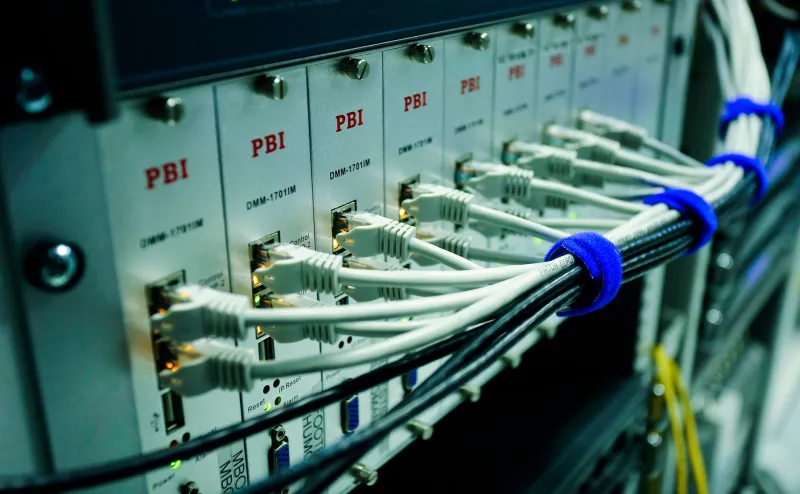
Microseconds That Matter: Why Distributed Systems Are Quietly Losing the Battle Against Clock Drift

There is a category of software failure that rarely announces itself. No stack trace appears. No alert fires. No dashboard turns red. Instead, the system simply behaves incorrectly in ways that surface days, weeks, or quarters later — in a financial reconciliation that does not balance, a conflict-resolution algorithm that chose the wrong winner, or an audit log that places events in an order that never actually occurred. The common thread in a surprising number of these incidents is not a bug in the traditional sense. It is time.
For engineers who work primarily in software, the physics of timekeeping can feel like someone else's problem. Clocks are assumed to be correct, or at least close enough. That assumption is quietly costing organizations data integrity they do not know they have lost.
The Clock Is Not What You Think It Is
Every server in a distributed system maintains a local clock — typically a hardware oscillator disciplined by software against a reference time source. In most production environments, that reference is the Network Time Protocol, or NTP. NTP is a mature, widely deployed standard that has kept the internet's clocks roughly aligned for decades. But "roughly" is doing significant work in that sentence.
Under favorable network conditions, NTP typically achieves synchronization accuracy in the range of one to fifty milliseconds. Under real-world conditions — asymmetric routing, congested links, virtualized environments where the hypervisor can suspend a guest clock for arbitrary durations — that figure degrades substantially. In cloud environments, where a virtual machine may share physical hardware with dozens of other tenants, clock slew events of tens or even hundreds of milliseconds are not theoretical edge cases. They are routine.
For many applications, a fifty-millisecond error is inconsequential. For distributed databases, event-driven microservice architectures, and any system that uses timestamps to establish ordering or causality, it can be catastrophic — and invisible.
Race Conditions You Cannot Reproduce
Consider a distributed inventory management system deployed across multiple regional data centers. Two nodes receive concurrent write requests for the same record. Both nodes apply a "last write wins" strategy, using local timestamps to determine which update takes precedence. If one node's clock is running forty milliseconds ahead of the other's, the older update wins. Stock levels are wrong. The error propagates silently into downstream fulfillment systems.
This is not a contrived scenario. It is a structural vulnerability embedded in any architecture that treats local timestamps as a reliable proxy for event ordering. The failure mode is particularly treacherous because it is non-deterministic. Reproducing it in a test environment — where machines typically run on a single host or a tightly controlled network — is nearly impossible. The bug only manifests at the intersection of distributed state, concurrent access, and clock divergence, a combination that only exists at production scale.
Similar dynamics affect distributed caches, message queues, and consensus algorithms operating outside their intended timing envelopes. In each case, the root cause is not a software defect in the conventional sense. It is a temporal consistency failure — a time-domain problem wearing application clothing.
NTP Versus PTP: A Gap That Actually Matters
The Precision Time Protocol, defined in IEEE 1588, was developed specifically to address the limitations of NTP in environments where tighter synchronization is required. Where NTP targets millisecond-level accuracy, PTP — when deployed with hardware timestamping support — achieves sub-microsecond synchronization across a local network. The mechanism differs fundamentally: PTP uses hardware-level packet timestamping at the network interface, eliminating the software jitter that degrades NTP accuracy.
The practical implication is significant. Financial trading systems, telecommunications infrastructure, and industrial control networks have adopted PTP precisely because the cost of temporal ambiguity in those domains is well understood and well quantified. A trade executed at the wrong timestamp carries regulatory and financial consequences that are immediate and measurable.
In contrast, many enterprise software teams operating distributed databases and microservice architectures continue to rely on NTP not because it is adequate, but because the cost of its inadequacy has never been made visible. The errors do not crash the system. They simply corrupt it, slowly and silently, in ways that only become apparent when someone examines the data carefully enough.
Audit Trails and the Illusion of Accountability
Perhaps the most insidious consequence of timestamp drift is its effect on audit logging. Organizations in regulated industries — healthcare, finance, legal services — maintain event logs precisely because they need to reconstruct what happened, in what order, and why. Those logs are only as trustworthy as the clocks that generated them.
When a log entry from Node A shows an event occurring at 14:23:07.412 and a corresponding entry from Node B shows a dependent event at 14:23:07.389, the implication is that the effect preceded the cause. In a well-synchronized system, this is impossible. In a system relying on NTP across a heterogeneous cloud environment, it is a predictable artifact. Compliance teams and forensic auditors who encounter these anomalies face an uncomfortable choice: trust the logs, or acknowledge that the logging infrastructure itself is unreliable.
The latter conclusion has real consequences. Regulatory audits, litigation discovery, and incident post-mortems all depend on the assumption that timestamps reflect reality. When that assumption fails, the entire evidentiary record becomes suspect.
Treating Time as a First-Class Engineering Constraint
The path forward for systems engineers and backend architects is not necessarily a wholesale migration to PTP — though in environments where microsecond-level ordering matters, that investment is worth serious evaluation. The more immediate priority is a change in how temporal consistency is conceptualized during system design.
Time should be treated with the same rigor applied to other distributed systems concerns: fault tolerance, consistency models, network partition behavior. That means explicitly documenting the synchronization assumptions embedded in any ordering or conflict-resolution logic. It means testing clock behavior under adverse conditions, including simulated drift and slew events. And it means instrumenting production systems to expose clock offset metrics alongside the application-level metrics that currently dominate observability dashboards.
Several modern distributed database systems — Google Spanner being the most prominent example — have approached this problem by building uncertainty bounds directly into their transaction models. Rather than assuming clocks are correct, they assume clocks are uncertain within a bounded interval and design consistency guarantees accordingly. That engineering philosophy, applied more broadly, would eliminate a class of silent failures that currently costs organizations data integrity they cannot account for and cannot recover.
The Signal Beneath the Software
Engineers who work in RF, telecommunications, or precision instrumentation understand intuitively that time is a physical quantity with tolerances, error budgets, and propagation characteristics. The distributed systems community has inherited the same fundamental constraints without always inheriting the analytical frameworks to reason about them rigorously.
Clock drift is not a software bug. It is a signal integrity problem expressed in the time domain — one that propagates through application logic the same way phase noise propagates through a signal chain, degrading performance in ways that are difficult to observe directly but consequential at scale. Recognizing it as such is the first step toward building systems that do not silently lose the race against their own clocks.