Out of Sync by Nanoseconds: The Sensor Fusion Timing Crisis Threatening Autonomous Navigation
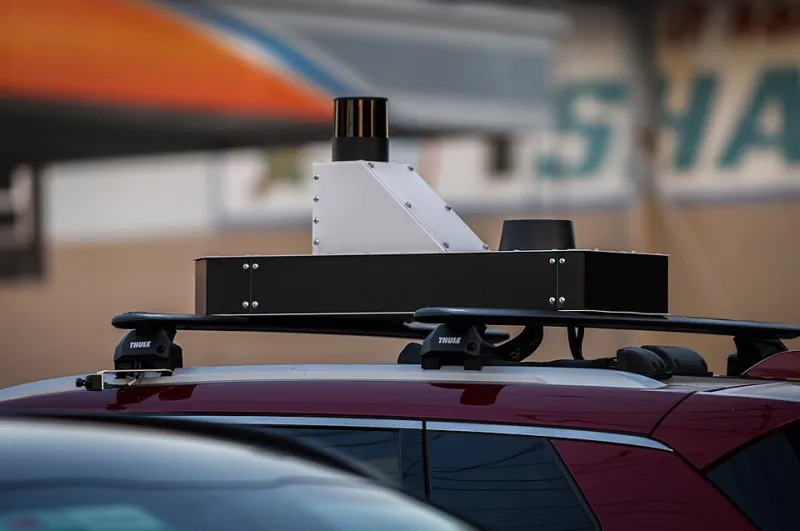
Photo: 9yz, CC BY 4.0, via Wikimedia Commons
The autonomous vehicle sitting in a test facility in Michigan is, by any reasonable measure, a technological marvel. Its sensor suite spans the electromagnetic spectrum: millimeter-wave radar probing through precipitation, lidar painting the environment in three-dimensional point clouds, cameras resolving lane markings and traffic signs, inertial measurement units tracking every micro-acceleration of the chassis. The fusion algorithms processing this data are among the most computationally sophisticated systems ever deployed in a consumer-adjacent product. And yet, buried beneath all of that capability, a problem persists that no amount of algorithmic sophistication can fully compensate for: the sensors are not actually looking at the same moment in time.
The gap may be microseconds. It may be milliseconds. In the worst cases, particularly across heterogeneous sensor arrays that were not co-designed, it may be tens of milliseconds. At highway speeds, tens of milliseconds of temporal misalignment corresponds to a positional uncertainty of roughly half a meter—larger than the margin required for reliable lane-keeping. At the nanosecond level, phase coherence errors between high-bandwidth sensors can corrupt the spatial registration that fusion algorithms depend on to construct a coherent world model.
Why Temporal Alignment Is Harder Than It Looks
The naive assumption is that timestamping is a solved problem. Assign each sensor reading a timestamp when it arrives at the compute platform, sort by timestamp, and fuse accordingly. This approach fails for several compounding reasons that become apparent only when the physics of the sensing modalities are examined carefully.
Lidar sensors, for example, do not capture a scene instantaneously. A spinning lidar completes a full rotation in roughly 100 milliseconds, meaning that different azimuthal sectors of a single scan frame were captured at different times—sometimes differing by tens of milliseconds within a single nominally synchronous frame. A camera, by contrast, captures a full frame in a single exposure event, but the exposure timing relative to the lidar scan is determined by the camera's internal trigger logic, which may or may not be synchronized to any external reference. Radar systems introduce their own temporal complexity: the coherent integration period required to resolve Doppler velocity spans multiple pulse repetition intervals, each of which contributes to the measurement at a different moment.
When these streams arrive at the fusion layer with host-assigned timestamps, the timestamps reflect when the data arrived at the compute platform—not when the physical measurement was made. The difference, which includes sensor-internal processing latency, bus transmission delay, and interrupt service latency in the host operating system, can easily exceed a millisecond and is rarely constant. On a general-purpose operating system running a non-real-time kernel, interrupt latency alone can vary by tens of milliseconds depending on system load.
The Phase Coherence Requirement
For sensor fusion to produce geometrically correct output, it is not sufficient that timestamps be approximately correct. The phase relationships between sensor streams must be coherent—meaning that corresponding measurements from different sensors must refer to the same physical state of the environment, or that the temporal offset between measurements must be known with sufficient precision to apply motion compensation.
Consider a vehicle traveling at 30 meters per second (approximately 67 miles per hour) while executing a lane change. If the lidar and camera streams are misaligned by just 10 milliseconds, the lidar point cloud and the camera image correspond to vehicle positions separated by 30 centimeters. A fusion algorithm attempting to associate camera-detected lane boundaries with lidar-derived road geometry will observe an apparent spatial offset that it may interpret as a calibration error, a detection artifact, or—most dangerously—a real environmental feature.
At higher bandwidths, the problem intensifies. Radar systems designed for high-resolution imaging operate with coherent integration times that impose strict phase requirements on the reference oscillator. If the radar's timing reference drifts relative to the platform's master clock, the coherent processing gain degrades, range resolution falls, and Doppler estimates become biased. These effects are not dramatic—they do not produce obvious failures—but they erode the quality of the radar's output in ways that downstream fusion algorithms will interpret as environmental ambiguity rather than sensor degradation.
Hardware Timestamping and Deterministic Networking
The engineering community has recognized for several years that software-layer timestamping is architecturally inadequate for high-integrity sensor fusion. The response has taken two complementary forms: hardware timestamping at the sensor interface and deterministic networking protocols that bound the latency uncertainty of data transport.
Hardware timestamping relocates the timestamp assignment from the host operating system to the physical interface layer—typically an FPGA or dedicated timestamp IC that captures the precise clock edge corresponding to the sensor's data-valid signal. When implemented correctly, hardware timestamping can reduce timestamp uncertainty to the sub-nanosecond range, limited primarily by the jitter characteristics of the reference oscillator rather than by software scheduling variability.
The reference oscillator itself is a critical design choice. GPS-disciplined oscillators, where satellite signal availability permits, provide timing traceability to UTC with nanosecond-level accuracy. In GPS-denied environments—urban canyons, tunnels, structured parking facilities—the platform must rely on a holdover oscillator whose stability determines how quickly the timing reference drifts from its last synchronized value. Temperature-compensated crystal oscillators (TCXOs) and oven-controlled crystal oscillators (OCXOs) offer progressively better holdover performance at progressively higher power and cost budgets.
On the networking side, IEEE 802.1AS (the automotive profile of the Precision Time Protocol) is gaining adoption in vehicle Ethernet architectures as a mechanism for distributing a common time reference across all compute nodes in the vehicle. When sensors and compute platforms share a synchronized network time base, the timestamp assigned to a sensor reading at the hardware interface can be directly compared to timestamps from other sensors without requiring any software-layer correction. Time-Sensitive Networking (TSN) extensions to Ethernet further bound the latency and jitter of data transport, ensuring that the temporal integrity established at the sensor is preserved through to the fusion processor.
The Robotics Dimension
The timing synchronization challenge is not limited to automotive applications. Industrial robotics, autonomous aerial vehicles, and collaborative robot platforms face identical problems whenever multiple heterogeneous sensors must be fused to support navigation or manipulation. Research teams at several US universities—including groups working on warehouse automation and agricultural robotics—have reported that timing synchronization errors are among the most persistent sources of localization drift in field deployments, particularly when sensor configurations are changed or upgraded without revisiting the timing architecture.
The Robot Operating System (ROS), which underpins a large fraction of US robotics research and development, provides timestamp fields in its message structures but relies on system clock timestamps assigned at the software layer. Projects migrating to ROS 2 with real-time kernel configurations are beginning to address this through hardware synchronization interfaces, but the ecosystem-wide adoption of hardware timestamping discipline remains incomplete.
Building for Coherence
The path forward requires treating temporal coherence as a first-class design requirement rather than an implementation detail to be addressed after the sensor suite is selected. This means specifying timestamp uncertainty budgets alongside spatial accuracy requirements, selecting sensors that expose hardware trigger and synchronization interfaces, and designing compute architectures around deterministic networking standards from the outset.
The nanoseconds matter. They always have. The autonomous systems community is beginning to learn what RF engineers have known for decades: phase coherence is not a refinement—it is a prerequisite for the measurement to mean anything at all.